
The Geopark experiences a maritime (or ‘oceanic’) climate, that’s to say, due to the proximity of the ocean, summer temperatures are lower and winter temperatures are higher than they would otherwise be. You’ll recognise it – frequently cool and damp!
Just as across the rest of Britain, temperatures are higher than they would typically be for this latitude (the Geopark sits at around 51.8° N) due to the warming effect of the North Atlantic Current, a north-easterly extension of the Gulf Stream. January and February are the coldest months whilst highest temperatures can be expected from June to August.
The prevailing wind is south-westerly though the frequent weather systems bring wind from different quarters and these are subsequently influenced at low altitudes by the orientation of mountains and valleys.
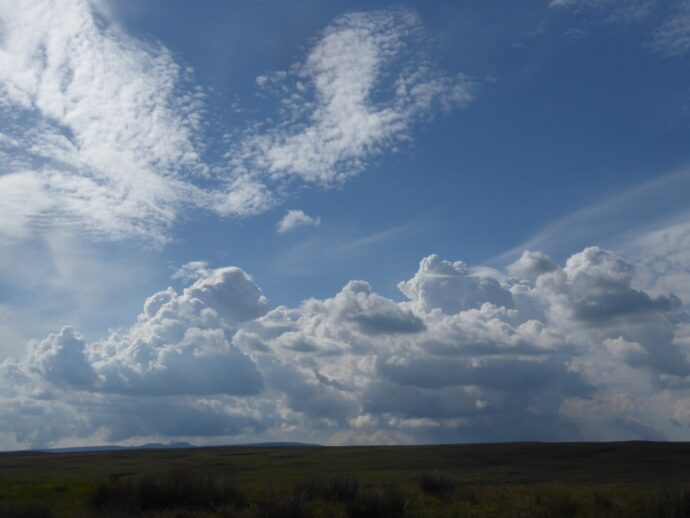
Precipitation is more common in the winter months and falls more frequently in the west and at higher altitudes. September sees least rain whilst highest totals can be expected in December. Snow falls on higher ground typically on a few days each year but rarely lies on the ground for more than a few days. The area’s high rainfall fills several reservoirs within the Geopark which supply Cardiff and the South Wales conurbation to the south.
The northeast around Brecon is the sunniest part of the Geopark whilst the southwest enjoys least sun. There is frequently a marked north-south division in the area; on such occasions cloudy and wet conditions can prevail all day in Cwm Tawe for example, whilst the Usk Valley enjoys warmer, sunnier weather.
Effects on farming and wildlife
Together with other factors such as the underlying geology and slope aspect, the local climate has a strong influence on natural vegetation distribution and on farming across the Geopark. The temperate rainforests (also referred to informally as ‘Celtic rainforest’) which constitute the native woodland in parts of the Geopark have arisen within this maritime climate, thriving in the often cool, damp conditions.
The climate of past decades with its mild winters and cool summers, has resulted in a long annual growing season ranging between 240-320 days, though it is shorter in the highest parts of the Geopark. The soils are moderately wet and indeed sometimes waterlogged. This fact and the steeply sloping nature of much of the ground makes grazing a better farming prospect than the growing of cereals and other crops.
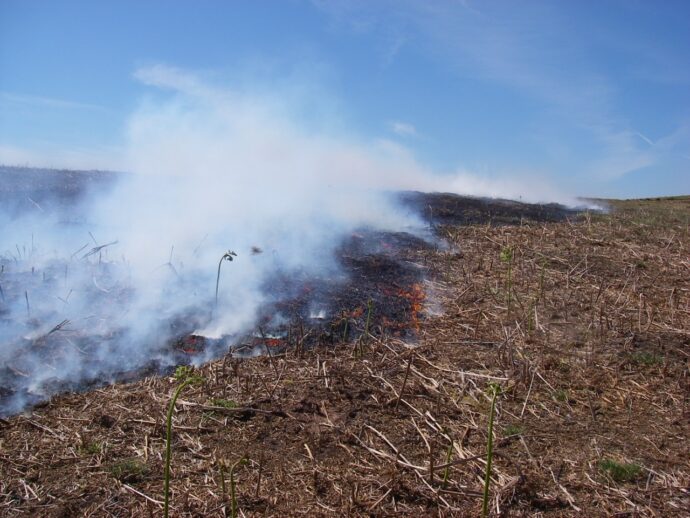
Moorland fires are not uncommon. Very few have a natural origin; most are started either accidentally or deliberately. Dry conditions can often prevail in the spring, just right for fires to take hold, when they can be especially damaging for ground-nesting birds.
Past climates
In common with the rest of northwest Europe the Geopark experienced dramatically cooler temperatures during what is known as the Younger Dryas, a period of 1200 years from about 12,900 to 11,700 years ‘before present’ (BP)*. Several thousand years prior to that, an ice age had settled in globally and the glacial conditions experienced here in the Geopark and elsewhere in the UK are referred to as the Devensian Ice Age.
*BP – a standard approach used by geologists and archaeologists, BP is defined as the start of the year 1950, so in 2025, we are talking of this cold period being between 12,975 and 11,775 years ago).
The future
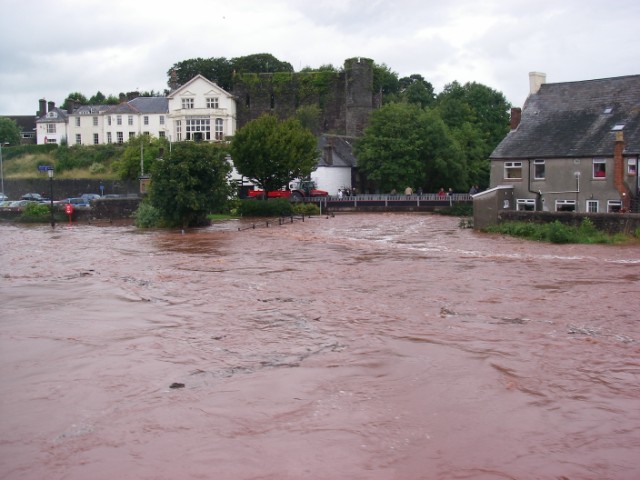
Anthropogenic, or ‘man-made’, climate change is expected to provide the Geopark with a warmer and wetter climate. By 2025 it was already experiencing more intense and frequent heavy rainfall events than the long-term average. These events are linked to an increase in landslips and erosion by streams and rivers. Periods of warmer, drier weather also appear to be on the increase. The combination of the two is especially problematic for farmers and for wildlife to deal with.
Resilience
The increased incidence of landslips and of flooding arising from heavier rainfall can be mitigated by reducing grazing pressures to encourage thicker vegetation cover in places, and by the planting of trees. Capturing and slowing run-off can also be achieved in other ways which benefit wildlife and work for farmers.
SDG13
The Geopark is supportive of UNESCO’s Sustainable Development Goal 13 which seeks to ‘take urgent action to combat climate change and its impacts‘.
More information from UNESCO.